


About Polydemy We're not a school.
We're not a school.
We're the missing half.
 Hola
Hola
 Bonjour
 Hello
Hola
Bonjour
Hello
Hello
Hola
Bonjour
Hello
Polydemy is the Academy of Natural Language Acquisition. Not a metaphor — a specific claim: language schools teach you the input (rules, vocabulary, grammar), and apps and immersion give you more of it.
Almost nobody gives you the other half — output, and someone catching your mistakes before they calcify. That's the entire business. We supply the output and the correction. Everything else, you already have.
You read the menu. You follow the news. You get the message from your mother-in-law. Then someone asks you something out loud, and the sentence dies somewhere between your head and your mouth.
You are not missing words. You're missing output — and someone catching the mistake before it sets. That's the entire gap between “I understand it” and “I speak it,” and almost nothing on the market is built to close it.
Years of classes, apps, subtitles, scrolling. Nobody arrives here without input. That was never the missing piece.
You talk. Every session, every person, no hiding in the group. Not “eventually, once you're ready” — from the first session.
Nothing is explained to you in advance. The teacher catches a sentence you actually said and sends you back into it, while you still remember what you were trying to mean. What you work out yourself, in your own words, is what stays.
Topic decks, field-specific vocabulary, notes from your own sessions. They exist to feed the conversation, not to replace it. You don't do homework instead of talking. You do it so the next conversation goes further.
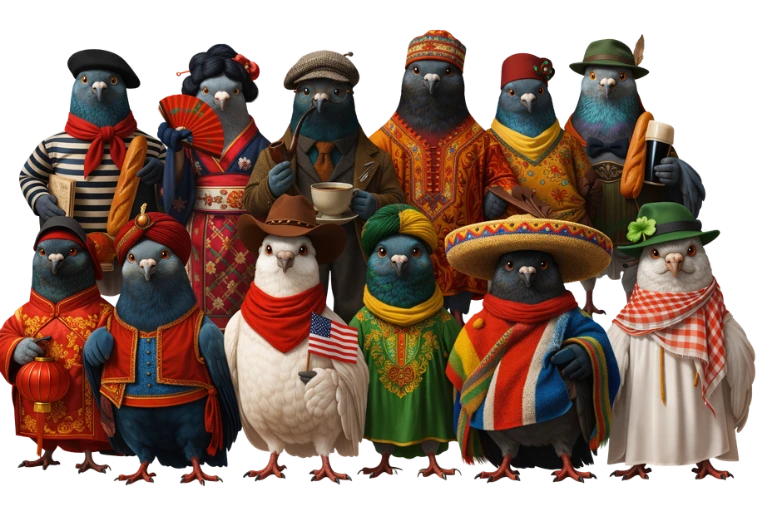
Two systems. Two completely different outcomes. Discover why the traditional path fails and how our Conversation Lab actually works.
Memorize grammar tables without context.
Fill in blanks in silent workbooks.
Listen to a teacher talk about the language.
Maybe, eventually, if you’re not too afraid.
The dynamic, natural way humans actually acquire language.
REVERSE APPROACH
Our method, in one line
No whiteboard. No “today we’re learning the subjunctive.” You say something, out loud, mid-conversation — and your teacher hands it back to you. “You just said that in the past tense. Why? What would change if you said it differently?”
You end up explaining your own sentence to yourself. That’s the part that actually sticks — not because someone told you the rule, but because you noticed it in something you actually said.
A kid learning to talk is wrong constantly, out loud, in front of the people whose opinion matters most to them — and it doesn’t cost them anything. Nobody flinches. Nobody waits for them to finish so they can hand back the correct version. Being wrong is just part of talking, so they keep talking, and the language settles in around the trying.
Adults lose that. Somewhere between childhood and a client call, being wrong out loud stopped being free. Now it’s a colleague noticing, a stranger switching to English out of politeness, a partner’s family going quiet for half a second. So the sentence gets edited in your head before it comes out — and half the time it just doesn’t come out at all.
That’s not a vocabulary problem. It’s the actual mechanism natural acquisition depends on, shutting down the moment there’s an audience.
This is what the room is built to undo, deliberately:
No one steps in mid-word to fix you — that’s exactly where the shutdown happens, and it’s the one thing we protect against completely.
You get to be heard first, understood first. Being right comes second.
A teacher holding two or three patterns feels like a person paying attention. A teacher holding forty feels like a grade you’re about to get.
The freeze only survives in isolation — the fastest way to kill it is watching four other adults be wrong and completely fine.
“Years of input and almost no output, and we still expect fluency to appear somehow. But languages don't work like that. If you want to speak a language, you have to speak it — not just study it. Traditional systems promise that speaking will come later. We know it won't, because speaking isn't the final step — it's the method.”
Sophie speaks seven languages, has lived in eight countries, and built Polydemy around the one thing that was missing every time she learned a new one herself.
Every one of them acquired the language they teach as an adult. They have been through the freeze in a real conversation. They recognise it when it happens to you.
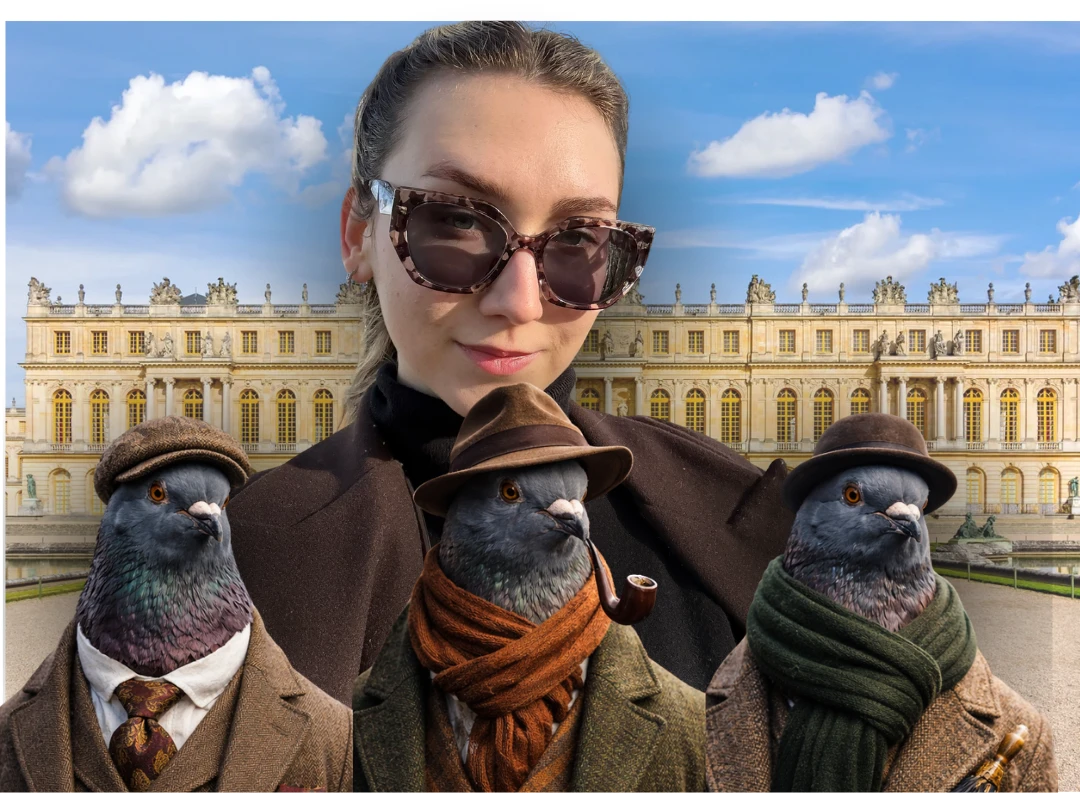
English and Ukrainian Conversation Lab Moderator
I learned English, Spanish, Russian, Slovak and Czech as an adult — sometimes a new one almost every year. After the fifth language, I stopped pretending it gets easier. What gets easier is knowing how YOU specifically get stuck. That is the part I help my students figure out, fast.
Sophie has lived in five countries, and almost every year she starts learning a new language.

Conversation Lab Moderator
I picked up English as a teenager and just never stopped — French, Italian, Russian, German all came later, one after another. Every new language taught me something about how my own brain stalls under pressure, and how to nudge it past that. So when a student freezes mid-sentence, I know exactly what is happening — and what helps.
Marina especially enjoys finding what different languages have in common, etymologies, and the history of languages.
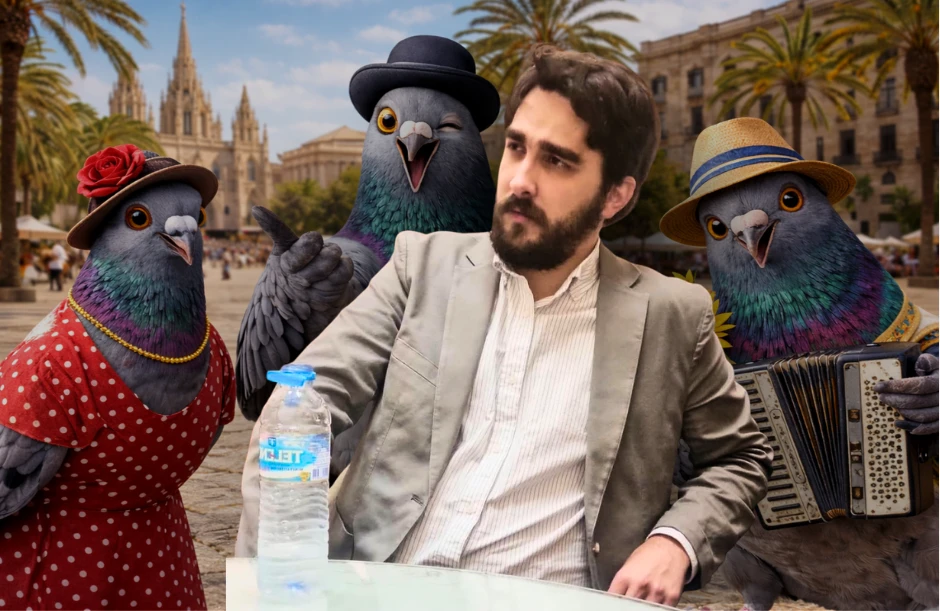
Spanish Conversation Lab Moderator
Ukrainian is the language I learned the deepest — entirely as an adult, often by reading poetry out loud at home, hoping no one walked in. The hardest part was never the grammar. It was being willing to sound a bit ridiculous for long enough to start sounding natural. That is exactly what I teach.
Ignatius's Ukrainian is so advanced that he reads Ukrainian poetry and sometimes uses words that even native speakers rarely use.
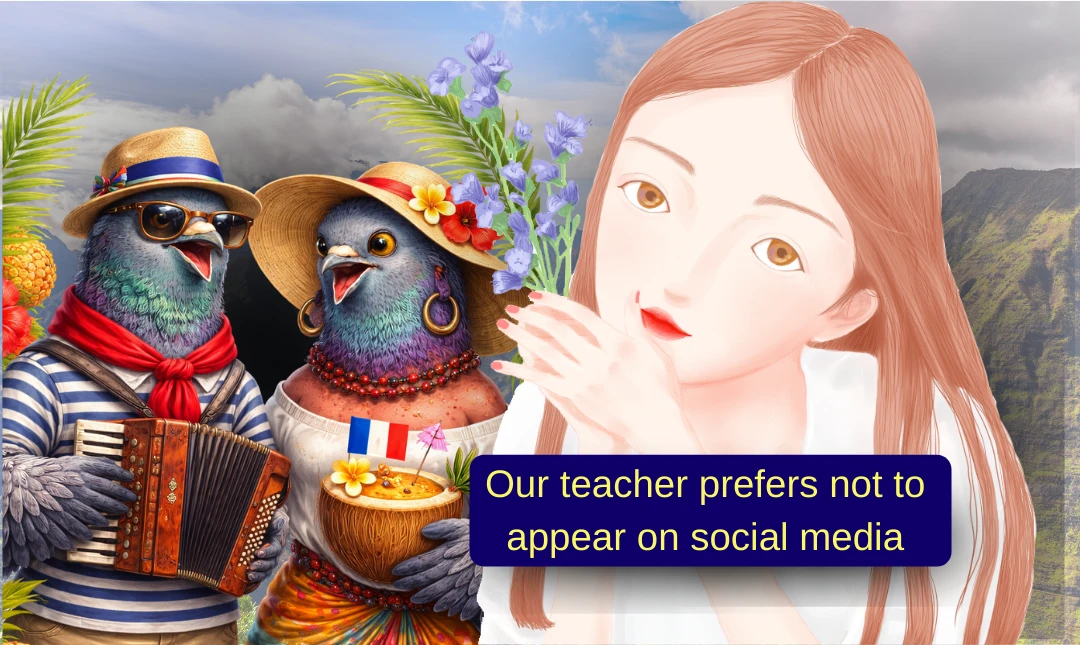
French Conversation Lab Moderator
I started Irish Gaelic as an adult while living in Ireland — a language with completely alien grammar. For weeks I understood every word in a sentence and still could not make my mouth produce one. That stuck feeling never fully leaves you, and that is exactly why I notice it the moment a student is hitting it.
Lea lived in Ireland, where she studied Celtic languages and developed a fascination with Slavic languages as well. Lea is a bit camera-shy, so she lets her avatar do the talking.
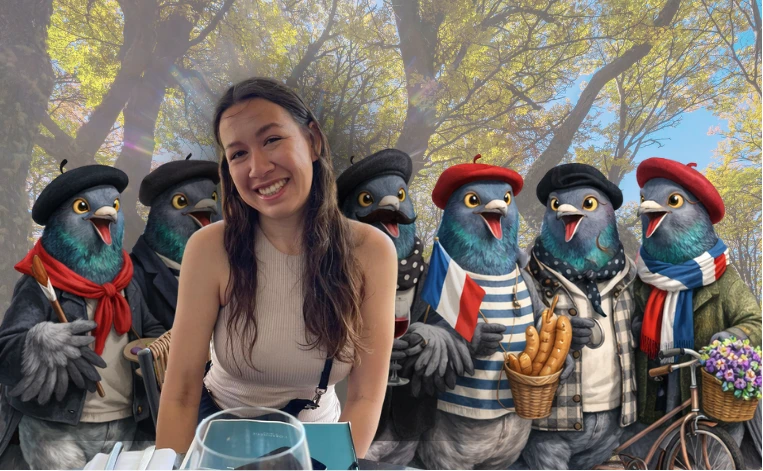
French Conversation Lab Moderator
I learned Spanish in my twenties when I moved to Mexico — not from a textbook, but from being thrown into real conversations every day. I remember the exact week I stopped translating in my head and just spoke. That switch took months of feeling lost first. When students worry they will never "think in French," I know exactly what they are going through.
Laura lived in Mexico, Singapore, Germany, and Spain. Laura loves exploring cultures and is preparing her PhD thesis on Madagascar history.
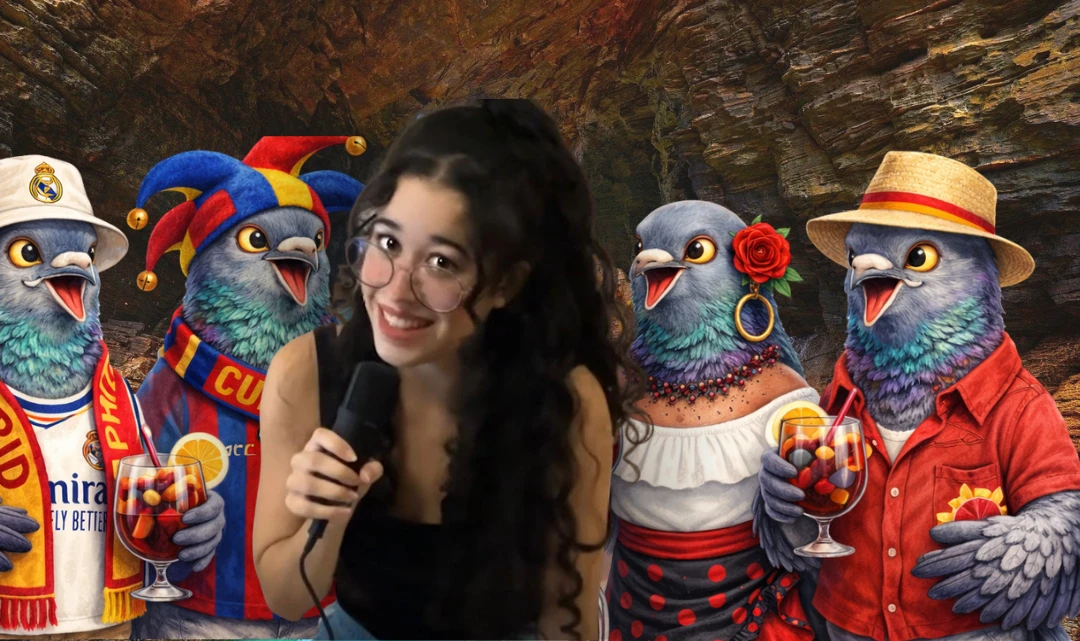
Spanish Conversation Lab Moderator
I learned Russian and English as an adult — slow, painful, full of doubt — and eventually ended up interpreting at the United Nations, where there is no hiding behind a grammar book. What got me there was speaking before I felt ready, every single time. That is the same nudge I give my students, kindly.
Sabela once worked at the United Nations as an interpreter, where multilingual communication was part of everyday work.